Short answer: for many self-employed deductions, you may not need a physical receipt for every single purchase—but you still need adequate records and sometimes documentary evidence to substantiate what you claim. The IRS frames this as the burden of proof: you must be able to prove entries and deductions you report. "No receipt" is therefore not the same as "no proof."
This article focuses on the filing-time lens for Schedule C–style businesses—habits and categories where people say "receipt-free." If an IRS letter is already in your mailbox, switch mental gears: read our audit-focused guide on what happens when you're audited without receipts, where reconstruction, evidence chains, and exam timelines matter more than mileage shortcuts.
Below, category sections explain what people usually mean by "receipt-light." If you want a single repeatable workflow first, jump to How-to: defensible records.
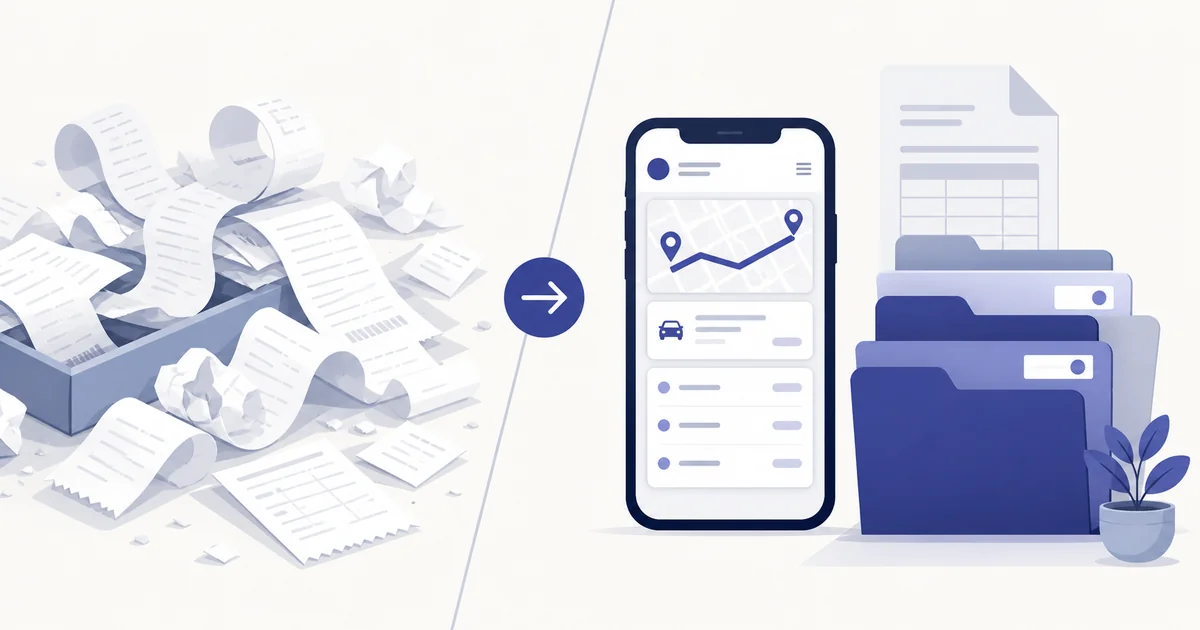
Capture receipts and memos on the go, categorize business spend, and export organized records—so you're building proof year-round, not scrambling at tax time.
TL;DR
- Think substantiation, not "saved every thermal strip." The IRS explicitly connects deductions to records and evidence (Burden of proof).
- Standard mileage replaces many auto expense receipts—not a mileage log. Rates are calendar-year specific (2026 business rate in IR-2025-128: 72.5¢/mile from Jan. 1, 2026).
- Simplified home office reduces home-allocation paperwork for the qualified use, but you must still qualify under the business-use tests (Publication 587).
- Travel, meals, gifts: Publication 463 lists when documentary evidence isn't required—including an expense under $75 other than lodging. Lodging is not in that under-$75 exception.
- Charity: cash gifts need a bank record or written communication from the charity (Topic 506); separate rules hit at $250+.
- For a broad list of freelancer write-offs (without duplicating it here), see freelancer tax deductions.
"No receipt" vs. "no proof"
Receipts are convenient because they bundle amount, date, and payee. IRS guidance still asks whether you can prove expenses when you deduct them—through logs, invoices, card activity, and (where required) documentary evidence. If you approximate or estimate without a factual basis, you are on thin ice: Publication 463 states you can't deduct amounts that are mere estimates.
| Myth | Closer to IRS framing |
|---|---|
| If I lost receipts, I can't deduct anything. | You may still support deductions with other credible records, but quality depends on category. Some expenses expect stronger documentation. |
| Under $75 never needs paperwork. | Pub 463's under-$75 documentary evidence exception applies to non-lodging expenses in the listed sense—not a blank check for every tax line. |
| Standard mileage means zero records. | You still need to identify which miles were business and support business purpose. The rate converts miles to dollars—it doesn't invent miles. |
Who this guide is for (and what we skip)
We write primarily for sole proprietors and single-member LLCs reporting business profit on Schedule C. Employees claiming unreimbursed work expenses face a much narrower federal deduction world post-TCJA; if that's you, start with current IRS guidance rather than Schedule C examples.
We also won't re-list twenty generic "write-offs"—that's the job of our freelancer deductions overview. Here we focus on documentation mechanics and categories people miscast as "receipt optional."
Standard mileage (business use of car)

The optional standard mileage rate packages many vehicle costs into a per-mile figure. It can reduce the shoebox of gas and repair receipts—but not your obligation to show business miles. For overview rules, see Topic 510. For 2026, the IRS announced a business rate of 72.5 cents per mile beginning January 1, 2026 (IR-2025-128). Historical rates live on the IRS standard mileage rates table—including 2025 at 70¢—so you use the year you're filing, not whichever number you remember from social media.
Simplified home office method
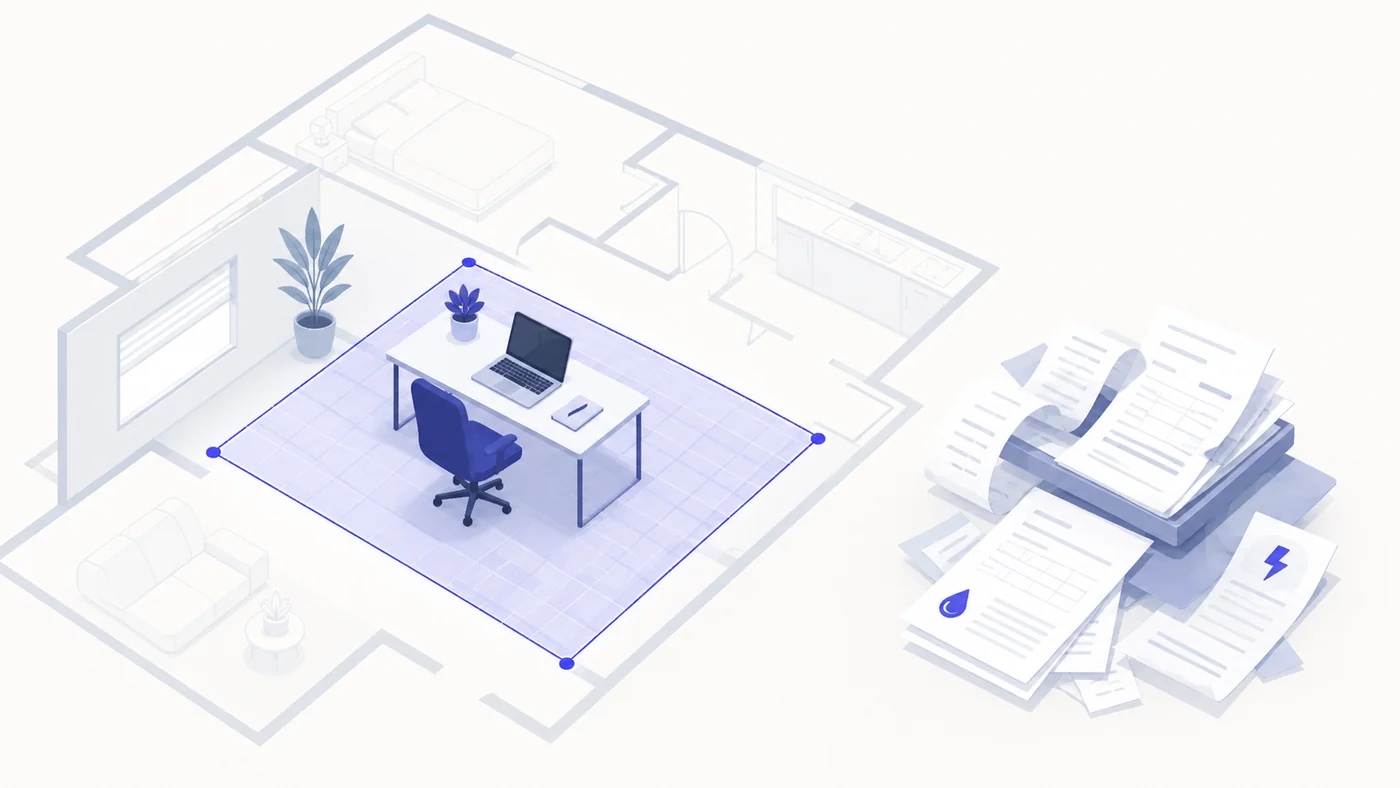
If you qualify for business use of your home, the simplified method is an alternative to allocating and substantiating many actual home expenses. In most cases you multiply the prescribed rate (commonly $5) by the business-use square footage, with the area for that calculation often capped at 300 square feet—details and election rules are in Publication 587. You still must meet the underlying qualification tests; the simplified path doesn't bless a kitchen table you also use for Netflix as "exclusive business use."
| Simplified method | Actual expenses |
|---|---|
| Prescribed rate × allowable sq ft (often capped at 300 sq ft for the simplification) | Allocate and substantiate eligible home costs by business-use percentage |
| Treated as claiming zero depreciation for the simplified home-office portion that year (see Pub 587 for follow-on years) | Depreciation and complex limits may apply |
Travel, meals, gifts, and lodging (Publication 463)

This is where "I don't need receipts" advice ages poorly. Publication 463 explains adequate records, documentary evidence, and explicit exceptions—including when your expense other than lodging is under $75, and when a receipt isn't readily available for certain transportation. Lodging is a headline exception to the under-$75 rule: plan on strong hotel documentation plus a contemporaneous trip record.
Meals may be subject to the 50% limit where applicable; gifts carry per-donee caps. None of that disappears because a TikTok said "just estimate."
| Category | Record mindset |
|---|---|
| Lodging | Treat as high documentation; itemized folio + trip context. |
| Meals | Who, where, when, why + payment trail; watch percentage limits. |
| Business gifts | Track recipients and business relationship; limits are statutory, not vibes. |
Self-employment tax, health insurance, and retirement
After you compute self-employment tax on Schedule SE, you may deduct one-half of that tax when figuring AGI (Topic 554). That's mechanical—not a substitute for proving your underlying Schedule C expenses.
Self-employed health insurance can be an above-the-line adjustment when eligible; use Form 7206 guidance and the self-employed discussion in Topic 502. You still need credible payment evidence statements or insurer documents even when you lack a coffee-shop receipt.
Retirement contributions (SEP, SIMPLE, solo 401(k)) follow earned-income and timing rules—start with Publication 560 rather than a blog's rounded dollar cap from last decade.
Charitable contributions
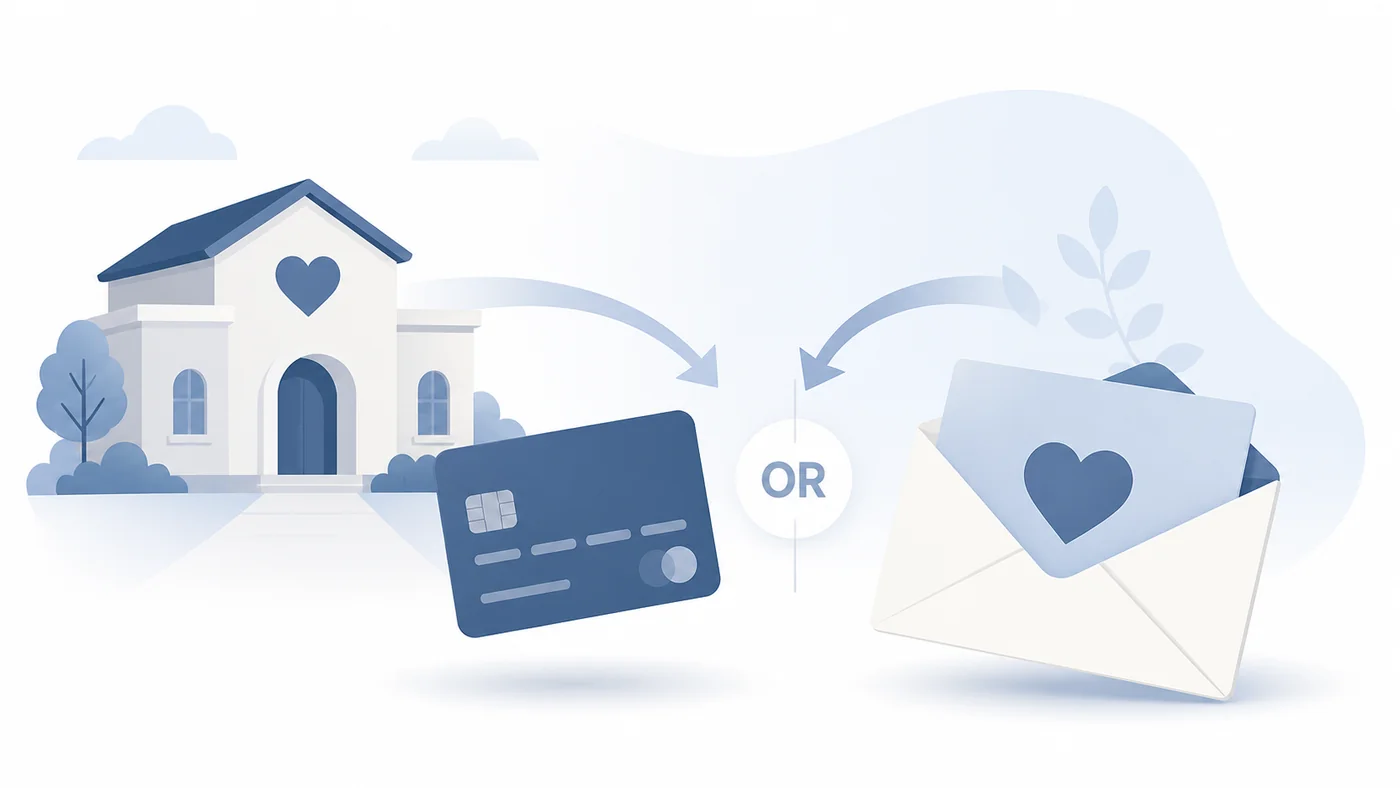
Charitable donations are often discussed next to business expenses, but substantiation follows gift rules—not Schedule C routine. For cash and monetary gifts, Topic 506 requires a bank record or qualified charity written communication with name, amount, and date—regardless of amount for that baseline record rule. Contributions of $250 or more need a contemporaneous written acknowledgment from the organization, with additional layers for noncash property and Form 8283 thresholds.
Beginning with tax year 2026, Topic 506 also describes a potential above-the-line deduction path for certain cash contributions when taxpayers do not itemize, with caps stated on the live Topic page—verify eligibility there when you file; summaries on blogs go stale quickly after legislation.
Schedule C vs. Schedule A: many charitable deductions only help when you itemize, which interacts with the standard deduction—see Topic 506 and Schedule A guidance. Don't assume your business standard deduction on Form 1040 substitutes for gift substantiation when you itemize charitable gifts.
How to keep Schedule C deductions defensible without perfect receipts
Filing-time habit checklist for self-employed taxpayers: build adequate records (not just paper receipts) for mileage, home office, travel, and donations. This is a habit checklist, not individualized tax advice. Pair it with expense tracking workflows if you need a deeper system.
Separate business money and pick one capture system
Use a dedicated business card or labeled accounts when possible, and commit to one workflow—app, spreadsheet, or ledger—where every business outflow gets a category and a short memo the same week it happens.
Log business miles on a schedule
At least weekly, record date, starting and ending locations, business miles, and one line of business purpose. If you use the optional standard mileage rate, confirm you are using the IRS rate for the calendar year you are filing.
Treat travel, meals, and lodging as a timed diary plus documents
For trips, note dates, places, and business purpose near the time of the trip. Keep strong documentation for lodging. For meals and gifts, record who, where, when, and why—not just the payment trail.
Reconcile bank and card activity monthly
Match statements to invoices, receipts, or vendor portals. Flag missing items early while vendors can still resend documentation—before the tax year feels irrecoverable.
Verify IRS rules for the year you file before signing the return
Confirm standard mileage rates, simplified home-office elections, Pub 463 documentation expectations, and charitable contribution substantiation on current IRS topics and publications for your tax year—not from memory or social clips.
Weekly checklist (copy/paste)
Pair this with tracking business expenses as a freelancer for a fuller workflow.
Weekly 15-minute habit (Schedule C / self-employed)

□ Mileage: Log each business trip — date, from/to, business miles, one-line purpose.
□ Home office: Confirm you still meet exclusive & regular use; note sq ft if using simplified method.
□ Travel & meals: For trips — dates, places, business purpose; keep lodging documentation strong.
□ Gifts / client appreciation: Note recipient context and amounts (Pub 463 gift limits still apply).
□ Charity: File bank confirmations or charity letters; flag any gift needing $250+ acknowledgment.
□ Spot-check: Read IRS "burden of proof" — do you have adequate records or only good intentions?
Monthly reconciliation (about 30–45 minutes)
Once a month, open your bank and card feeds and walk every business expense line by line. For each charge, you should be able to point to a receipt image, invoice PDF, contract, email approval, or—at minimum—a note written near the time of purchase that states the business purpose. Anything unexplained gets a vendor follow-up that month, not next March.
If you use the simplified home office method, reconciliation is less about allocating utilities—but you should still confirm the space remains exclusive to business and that you are comfortable defending your square footage if asked.
Common mistakes
- Conflating "no receipt" with "no records." A mileage log, calendar, invoice PDF, or card feed is still a record.
- Using the under-$75 rule for lodging. Pub 463's listed exception is explicitly other than lodging for that bullet.
- Treating bank statements as magic. They show cash movement; you still tie amounts to deductible categories and ordinary/necessary business purposes—see also itemized receipts when vendors break out charges.
- Assuming "Cohan" is a filing checklist. Reconstruction discussions belong in an exam/controversy context—see our audit without receipts FAQ—not as permission to invent numbers on Schedule C.
- Mixing up tax years for mileage. Use the IRS table or news release for the year you file, e.g. 2026 at 72.5¢ vs 2025 at 70¢.
What this guide is not
This isn't individualized tax advice, state tax guidance, or a guarantee about any IRS examination outcome. Apps (including TaxLens) can reinforce capture and export habits, but they don't replace a qualified professional when categories, entities, or dollar amounts are disputed.
We cite primary IRS sources so you can verify wording; when a summary conflicts with the publication, trust the publication.
FAQ
Does "no receipts" mean I don't need proof for business deductions?
No. The IRS describes the requirement as proving (substantiating) deductions—often with adequate records and documentary evidence where needed—not merely keeping paper receipts for every purchase. See the IRS discussion of burden of proof and recordkeeping expectations: https://www.irs.gov/businesses/small-businesses-self-employed/burden-of-proof
If I use the standard mileage rate, can I skip a mileage log?
You shouldn't. The mileage rate is an optional way to convert business miles into a deduction; it replaces many actual vehicle expense receipts, not your need to show which miles were business miles and why. Confirm the calendar-year rate you're filing under on the IRS standard mileage page and related guidance (for 2026 business use, the IRS announced 72.5 cents per mile effective Jan. 1, 2026): https://www.irs.gov/newsroom/irs-sets-2026-business-standard-mileage-rate-at-725-cents-per-mile-up-25-cents Overview hub: https://www.irs.gov/taxtopics/tc510
Does the simplified home office method mean I need no documentation?
Not exactly. The simplified method mainly replaces allocating and substantiating many actual home expenses for the qualified business use (commonly $5 × square feet, with 300 sq. ft. frequently acting as a cap on the area used in the simplification), but you still must qualify under the usual business-use-of-home rules and be consistent with how you report related items like mortgage interest and taxes. Read Publication 587: https://www.irs.gov/publications/p587
What is the IRS "under $75" rule people cite for travel expenses?
Publication 463 explains when documentary evidence is not required, including when your expense, other than lodging, is less than $75. Lodging is explicitly outside that "under $75" exception in the same list—so hotel/lodging is still a category where you should plan on stronger documentary proof plus a timely trip record (dates, place, business purpose). Full rules: https://www.irs.gov/publications/p463 (see the Recordkeeping chapter).
Are business meals easier than other expenses if I lose receipts?
Usually no. Meals are commonly higher documentation risk than many routine supply purchases, and special limits (such as 50% where applicable) still apply. Think in terms of contemporaneous notes (who, where, when, why) and whatever third-party records exist—not "meals are receipt-optional." Starting point: Publication 463. If your question is audit-facing (already under exam), use our audit-focused guide: https://taxlensapp.com/blog/audited-without-receipts
For charitable donations, is a bank record enough if the gift is small?
For cash/check/electronic monetary gifts, Topic 506 states you must keep a bank record or written communication from the charity with name, amount, and date—regardless of amount for that monetary-gift record rule. Separate rules apply at $250+ (for example, contemporaneous written acknowledgment). Read Topic 506: https://www.irs.gov/taxtopics/tc506 Tax year 2026 note: Topic 506 also describes a potential above-the-line path for certain cash contributions when taxpayers don't itemize (dollar caps described there). Verify caps and eligibility on the live Topic page for the year you file.
Can I claim self-employed health insurance premiums without "receipts"?
You still need credible proof of payment and policy eligibility—often bank/card statements, premium invoices, or insurer statements—even if you don't have a literal thermal receipt. Eligibility and ordering rules are summarized in Topic 502 (self-employed discussion) and computed with Form 7206 instructions: https://www.irs.gov/taxtopics/tc502 https://www.irs.gov/forms-pubs/about-form-7206
Where does "reconstruction" or the Cohan rule fit in?
That's mostly an examination / tax controversy context—not a clean checklist for choosing deductions at filing time. If missing records are already a central problem (especially for meals, travel, gifts, or vehicles), treat professional help as the default. For a plain-English audit lens, read: https://taxlensapp.com/blog/audited-without-receipts
Bottom line
"Receipt-light" tax planning is really recordkeeping-smart planning: choose methods the IRS describes (mileage, simplified home office), keep timely logs for travel and meals, and match charity gifts to Topic 506's record rules. When the question is already "the IRS contacted me," pivot to reconstruction discipline—not this filing-time checklist.
Organize supporting files early: how to organize receipts for small business walks through a practical system.
Disclaimer: This article is general education only and is not legal, tax, or accounting advice. IRS publications, topics, and forms change; confirm current guidance for your tax year and situation. Consult an Enrolled Agent, CPA, or attorney as appropriate. State and local rules may differ.
Capture receipts and memos on the go, categorize business spend, and export organized records—so you're building proof year-round, not scrambling at tax time.